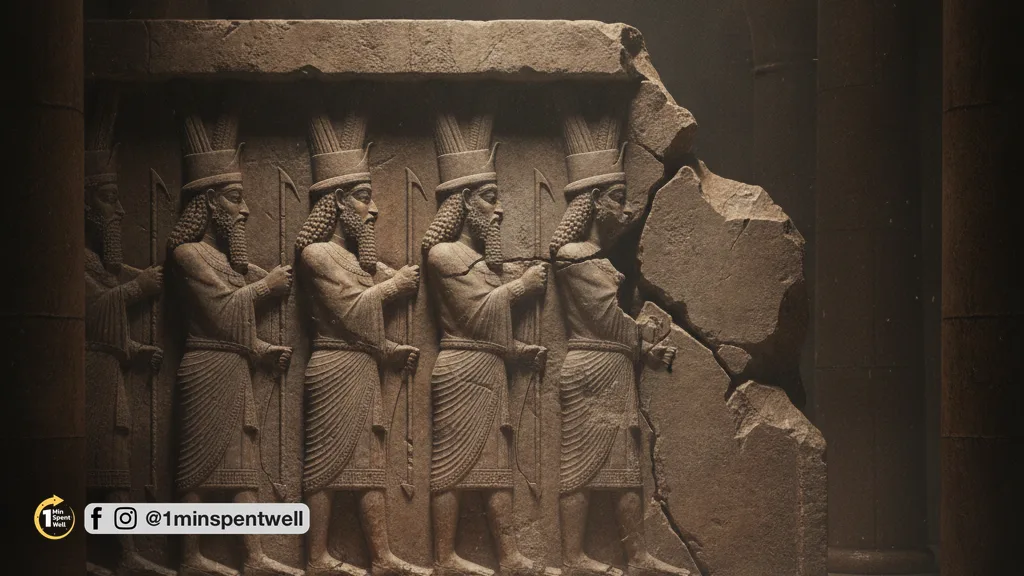
Assyria kept careful records of its kings, a list long treated as the reliable spine of ancient Near Eastern chronology. Historians used it to date wars, successions, even solar eclipses. But a newly published study from researchers at Yale and the University of Münster argues that record has a problem: three kings appear to be missing from it entirely.
That matters more than it sounds, because the Assyrian king list isn't just a record of who ruled when. It's the backbone other events get dated against. One example shows why: Assyrian records tie a revolt in 763 BCE to a solar eclipse, and historians have long used that eclipse to anchor dates across the ancient Near East. Eclipses are precise. If you know the year one occurred, you can lock in the timing of everything recorded around it, including reigns.
That's exactly why a gap in the list matters so much. If real rulers were quietly absent from the version of the record that survived, then some of what historians assumed about the order and length of Assyrian reigns may need a second look.
The new study, published in the Journal of Cuneiform Studies, doesn't just point out a hole. It proposes names to fill it, kings whose time on the throne apparently never made it into the official record at all.
It's a reminder that even a document trusted as complete for so long can turn out to have blanks nobody noticed. History isn't only what got written down. Sometimes it's what got quietly left out, waiting for someone to reread the record closely enough to spot the missing names.
Sources
- Journal of Cuneiform Studies. "Three New Kings of Assyria." 2026.
- Yale News. "Watch the Throne: Uncovering three new kings of Assyria." 2026.
- University of Münster. "Assyria's Hidden Kings." 2026.
- Encyclopaedia Britannica. "Eclipse." n.d.
Comments
No comments yet — be the first.