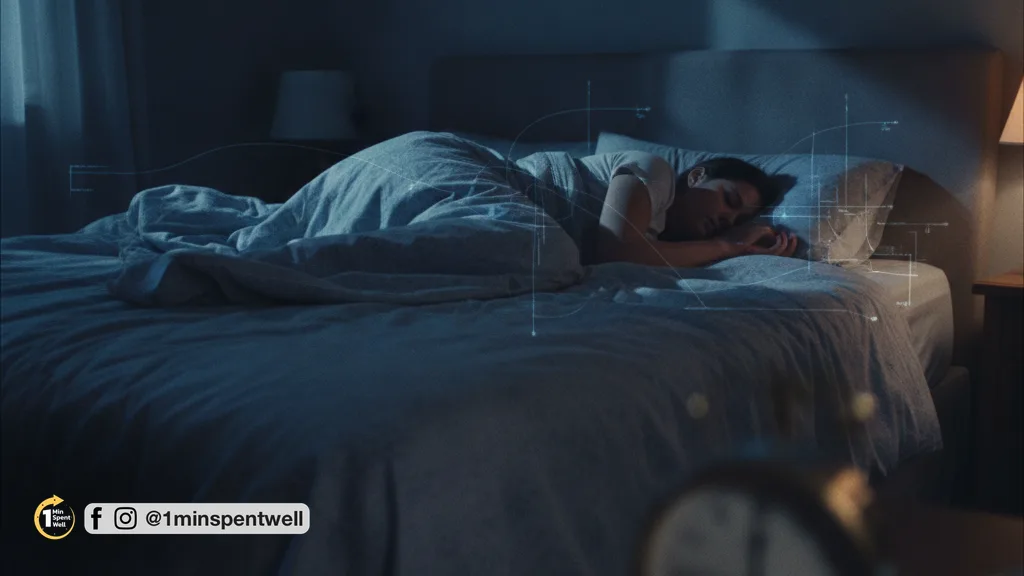
What would happen if you could measure exactly how fast your organs are aging, just from how much you sleep?
A large 2026 study set out to find out. Researchers built biological "aging clocks" for organs like the brain, heart, and lungs, then compared them against how long people said they slept each night. The clocks that looked youngest, across several (though not all) of the organs measured, belonged to people sleeping somewhere between 6.4 and 7.8 hours a night. Sleep less than that, or more, and the biology looked older than the person's actual age.
That range is narrower, and a bit lower, than the 7 to 9 hours most sleep guidelines recommend for adults. It doesn't overturn those guidelines so much as sharpen them: within the broader "healthy" zone, this data suggests there may be a tighter sweet spot where organs age most slowly.
The pattern itself isn't new. Older research on sleep and mortality, not aging biomarkers, found something similar: a U-shaped curve where both short sleepers and long sleepers faced higher death risk than people in the middle. Too little sleep and too much sleep keep showing up on the same side of the ledger.
Junhao Wen, the study's lead researcher at Columbia University, put it this way: "Too little and too much sleep are associated with faster aging in nearly every organ, supporting the idea that sleep is important in maintaining organ health within a coordinated brain-body network, including metabolic balance and a healthy immune system."
That's the real answer to the hypothetical. Sleep doesn't just refill your energy overnight. It appears to be quietly involved in how your organs age, working as one connected system rather than in isolation. Hit the range that works for your body, and the payoff isn't just feeling rested. It may be organs that look, biologically, younger than your age.
Sources
- MULTI Consortium (Wen et al.). "Sleep chart of biological ageing clocks in middle and late life." 2026.
- Cappuccio et al. "Sleep Duration and All-Cause Mortality: A Systematic Review and Meta-Analysis of Prospective Studies." 2010.
- National Sleep Foundation. "How Much Sleep Do You Really Need?."
Comments
No comments yet — be the first.