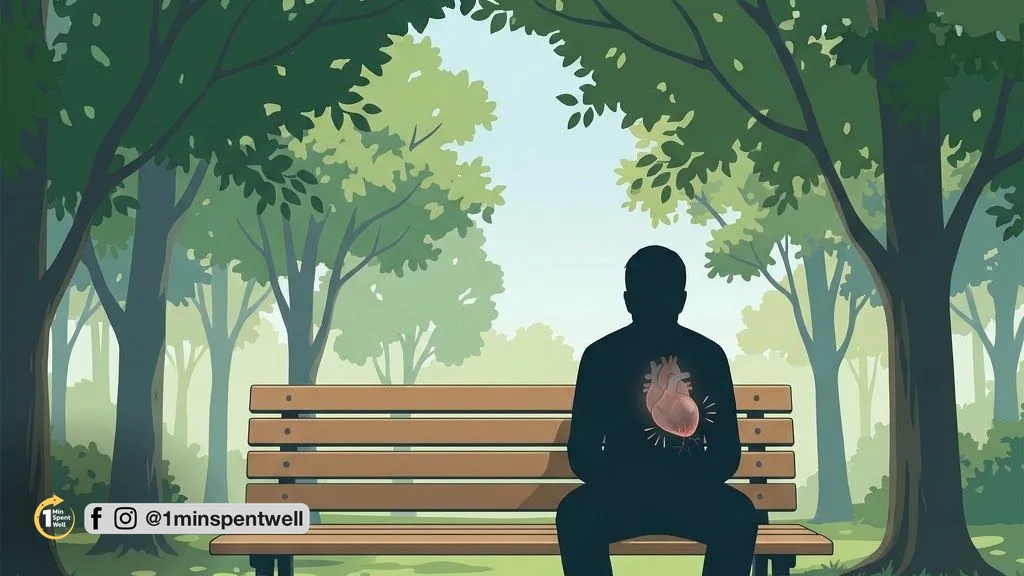
Grief isn't just an emotion. Doctors have a name for it happening to your actual heart: takotsubo cardiomyopathy, more commonly called broken heart syndrome.
The name comes from Japan. Under acute stress, the heart's main pumping chamber temporarily balloons into a shape that resembles a takotsubo, a traditional trap used to catch octopus. The shape change isn't symbolic. It's a real, physical distortion of heart muscle.
What causes it? Researchers believe intense emotional or physical shock, the death of a loved one, a divorce, even a sudden fright, triggers a flood of stress hormones. That surge is thought to temporarily overwhelm the heart muscle, disrupting how it contracts and pumps blood.
This isn't just a curiosity for cardiologists. It helps make sense of a pattern researchers have tracked for years: the widowhood effect. Studies, including a large meta-analysis, consistently show that losing a spouse raises the risk of death in the months that follow.
That's a strange kind of confirmation for something we've said in metaphor for centuries. "My heart is broken" turns out to describe, in at least some cases, an actual event inside a person's chest: hormones flooding the bloodstream, a heart chamber changing shape under the strain.
None of this means every grieving person will develop takotsubo cardiomyopathy, and the exact mechanisms are still being worked out. But it reframes something worth sitting with. The link between emotional pain and physical health isn't just a figure of speech. It's a documented, if not fully understood, medical reality. Grief isn't only felt. It's registered somewhere in the body.
Sources
- Harvard Health Publishing. "Takotsubo cardiomyopathy (broken-heart syndrome)."
- ALiEM. "Takotsubo Cardiomyopathy: The Octopus Trap."
- NIH / PubMed Central. "Broken Heart Syndrome: Evolving Molecular Mechanisms and Principles of Management."
- Moon, Kondo, Glymour & Subramanian. "Widowhood and Mortality: A Meta-Analysis." 2011.
Comments
No comments yet — be the first.