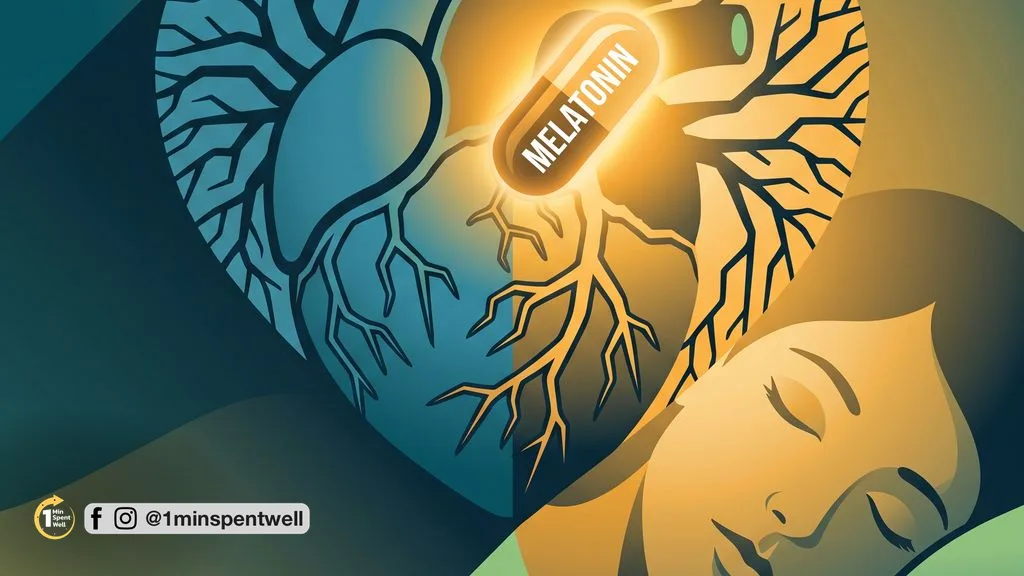
A statistic like this is designed to stop you mid-scroll: people with long-term insomnia who took melatonin nightly for an extended stretch had a 90% higher rate of heart failure than those who didn't. That's the kind of number that makes you want to toss the bottle today.
Before you do, it's worth understanding what this actually shows, and what it doesn't.
The finding comes from health records, not a controlled experiment where researchers randomly assigned people to take melatonin or not. That distinction matters. Researchers and outside experts who reviewed the work agree: it shows a statistical association, not proof that melatonin itself damages the heart. People who rely on a sleep aid every night for years also tend to have more severe insomnia, and insomnia itself is linked to anxiety, depression, and other conditions that could independently raise heart failure risk. Any of those, not the melatonin, could be doing the real work behind that 90% figure.
There's a second thing worth knowing, separate from this particular study. Melatonin sold in the US isn't tightly regulated the way prescription drugs are. The dose printed on the label doesn't always match what's actually in the bottle, sometimes by a meaningful margin.
Put those two facts together and a clearer picture forms. This isn't evidence that melatonin is secretly dangerous. It's a reminder that a supplement people treat as harmless, something to take nightly for years without a second thought, deserves more scrutiny than that.
If you've been taking melatonin long term, the useful move isn't panic. It's a conversation with a doctor about why you need it nightly, what's actually in what you're taking, and whether there's a better long-term plan for the insomnia underneath.
That's the shift worth making today: not quitting out of fear, but ending the habit of treating melatonin as something you never have to think twice about.
Sources
- American Heart Association. "Long-term use of melatonin supplements to support sleep may have negative health effects." 2025.
- Council for Responsible Nutrition. "CRN Responds to Melatonin Study Presented at AHA Scientific Sessions 2025." 2025.
- Science Media Centre. "Expert reaction to conference abstract on association between long-term melatonin supplementation and incidence of heart failure in patients with insomnia." 2025.
- The Washington Post. "Melatonin doses can vary from what's on the label. Here's how much.." 2025.
- Drugs.com. "Melatonin: Uses, Dosage, Benefits, and Side Effects." n.d.
Comments
No comments yet — be the first.